How application support operates
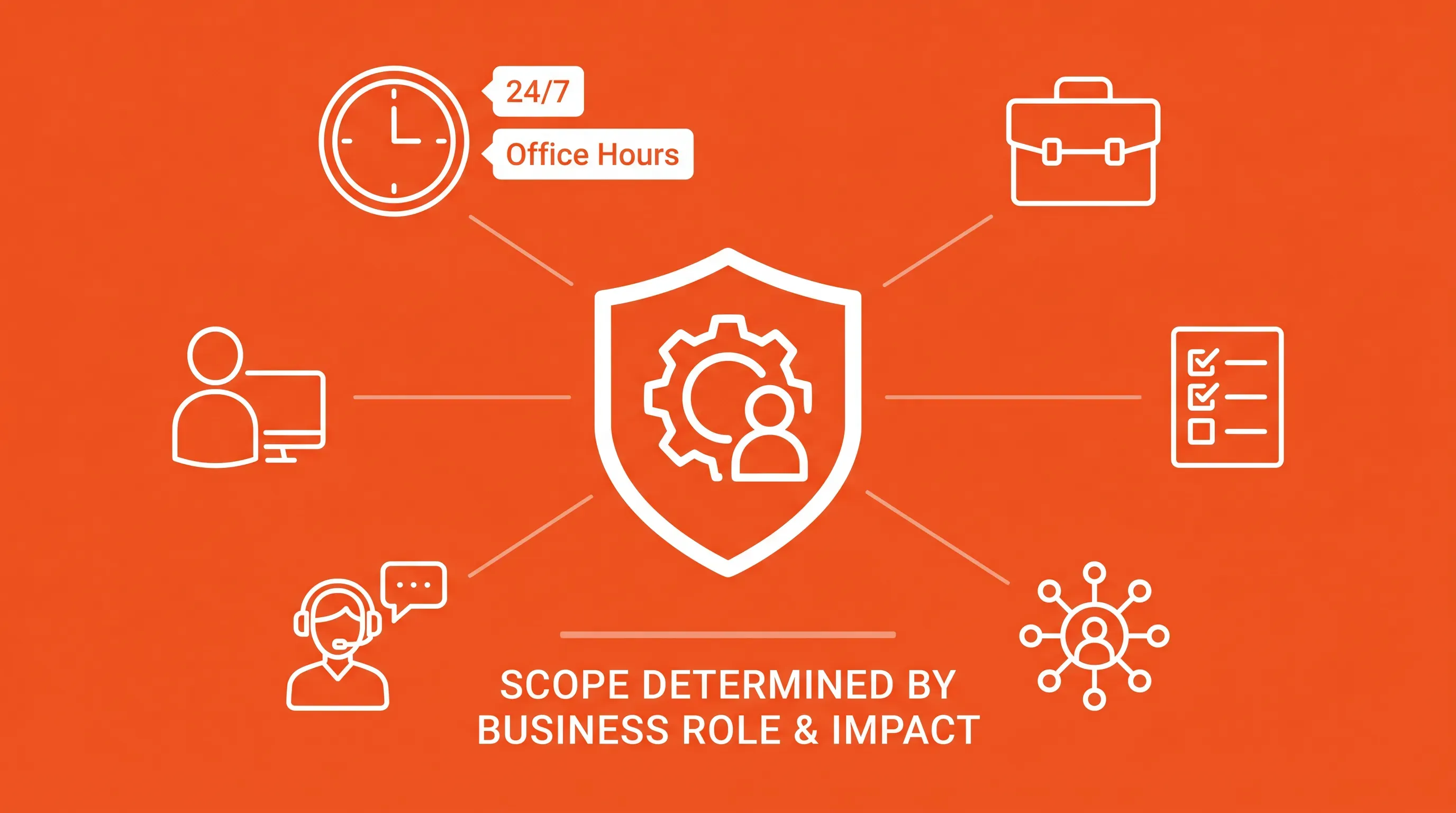
The technical work sits inside a service framework, and that framework is what makes support accountable. At a minimum, it defines an agreed request channel and service hours. It sets severity definitions alongside response and resolution expectations. It also establishes escalation paths and named ownership. Without these, you have effort but no standard to hold it to.
Business impact and urgency should determine priorities. A single point of contact model also protects the queue. ITIL guidance notes that when users bypass the service desk and go straight to senior engineers, it increases incident resolution time for most incidents and adds cost. Ticket records and service reporting keep the whole thing honest. Review meetings turn recurring risks and technical debt into clear decisions. Technical debt is not a minor concern. McKinsey found that 30 percent of CIOs believe more than 20 percent of their technology budget is diverted to resolving it.
One more thing deserves attention before you sign: exclusions. Confirm that hosting and third-party platforms sit outside the service. End-user helpdesk work and major feature development should also appear as exclusions. Knowing the boundaries is as valuable as knowing the coverage.
Plan a support takeover
Changing suppliers is where good intentions meet reality. An immediate switch, with no discovery and no handover, is how a business inherits a system nobody on the new team understands. A controlled takeover starts with a discovery and transition period instead. The first job is access, and it is more than a login. You need access to the source code and repositories. You also need the hosting and credentials. Confirm access to monitoring and deployment pipelines. Then secure the test environments and third-party accounts. Finally, collect the open issues list and whatever documentation exists.
With access secured, the transition follows a sequence:
-
Knowledge transfer with the outgoing supplier wherever that relationship allows it.
-
Code and architecture review to understand how the system actually works.
-
Risk logging and documentation repair before anyone commits to service targets. A set of readiness checks follows.
Be realistic about timing. When access or system knowledge is incomplete, the incoming provider needs a stabilisation phase before promising full response and resolution targets. Software maintenance already commonly occupies over half of a system's total lifecycle cost, and taking on an under-documented application blind only inflates that. A provider who insists on stabilising first is protecting you.
Choose an application support provider
An hourly rate and a promise of availability tell you almost nothing about whether a provider can keep your system alive. Compare them on what actually determines the outcome. Look at their experience with custom live systems and their incident process. Assess their monitoring capability alongside their security and release discipline. Then check the standard of their documentation. Then ask how they cover a key person's absence, because that is the exact risk you are trying to buy your way out of.
A few questions separate a real application support service from a reworded developer arrangement:
-
How do you learn an unfamiliar application, and how do you prove takeover readiness?
-
How do you report service performance, and how do you separate included maintenance from chargeable project work?
-
Are accountability and service targets written explicitly into the proposal and the contract? Do those documents also state the exit arrangements?
Colette Wyatt, CEO of Evolved Ideas, describes the firm's approach to client work this way: "We actually know what it takes to get your product to market." That builder's perspective matters in support, because the same discipline that ships a product well is what keeps it running afterward. If a provider cannot put accountability and exit terms in writing, treat the gap as your answer.
Build dependable ongoing support
Business-critical software needs an operating model that protects continuity long after the original build is finished. Effective application support combines fast incident response with active monitoring. It also provides routine maintenance and controlled releases. Retained knowledge supports clear business communication. Each part is weaker alone and stronger as one accountable service.
Evolved Ideas offers Support as a Service as an accountable option for organisations that depend on an existing custom application or need a structured supplier takeover. If you are weighing up your current risks and the coverage your system needs, it's worth talking through your application support requirements with our team.