
News and Insights

Stay up to date with the latest trends, industry insights, and expert knowledge

Blog Posts

A close-up of hands writing on documents at a wooden desk, surrounded by colorful post-it notes and a softly glowing laptop.

Membership website development: connecting members, events and CRM

An association’s public site and member portal often fail in the same way: they work on their own, but they no longer talk to the membership, payment, and event systems around them. Replacing either one is easier to commission when you start from seven requirements. Use them to set the scope first, then organise procurement around them, so every supplier responds to the same brief and the integration problems that prompted the replacement stay at the centre of the decision.

A focused programmer types on a laptop at a sleek black desk in a modern office, surrounded by multiple monitors displaying code.

Software intellectual property: 7 ownership questions before you sign

Paying for bespoke software does not automatically mean you own it, and the gaps usually surface when the relationship ends. Before you sign, settle seven questions about software intellectual property with your development partner and with qualified legal counsel. They establish what transfers to you, and what you need in practice to keep the system running if the partnership ends, such as source code, documentation, and access to the environments it runs in.

A person examines software development documents at a metallic desk, surrounded by a softly blurred office in warm natural light.

Fixed price vs time and materials for a software development project

Fixed price feels safe and time and materials feels flexible, but neither tells you what you’re committed to when the brief changes. Compare three ways to buy bespoke software: fixed price, time and materials, and a sequence of capped phases. For each, see what it commits you to and how an unplanned requirement plays out in practice. Then settle a short list of questions before you sign anything, while you can still change the terms.

A business professional focused on coding at a sleek black desk in a modern office with natural lighting and an exposed brick wall.

5 .NET development companies for established applications

Choosing a firm to look after an established, business-critical .NET application is a risk decision, and the case studies on a supplier’s website rarely settle it. Five companies that work on this kind of system are reviewed here against their published case evidence, so you can see what each one has demonstrably done. A set of due-diligence questions and a controlled trial brief then let you test any of them, including firms not on the list, before you hand over the application.

A lively outdoor scene with more people interacting, enjoying the atmosphere, and engaging in various activities.

Software maintenance costs: what to include beyond the monthly retainer

A support proposal for live software can look reasonable on the first page and still hide the real commitment in the clauses around it. Read it line by line so the annual cost is visible before you sign. Separate what you’re buying access to, such as response times, coverage, and named expertise, from what you’ll pay to leave, including notice periods, handover work, and renewal terms.

Flat lay of a smartphone with an app wireframe, calculator, printed supplier quotes, and an orange pen on a light desk in a modern office.

Mobile app development costs: 7 decisions that shape your budget

A budget for an operational business app usually starts as a guess, and quotes from different suppliers rarely help because they are built on different assumptions. Replace the guess with a fillable cost model, then work through the seven scoping decisions that move the number up or down. Once your own figure is in place, you can compare supplier quotes that look nothing alike and see what each one includes, and what it leaves out.

A person sits at a large wooden desk in a bright coworking space, engaged in conversation with colleagues, surrounded by modern furnishings.

Software development costs: build a budget for your business system

Supplier proposals for a bespoke business system are hard to compare when each one prices a different scope. Build your own software development cost budget before you ask anyone for a quote. A fillable cost model sets out what to include, and two fictional scope comparisons show how to get estimates you can compare line by line.

A diverse group of professionals discussing strategies to modernize a legacy system in a corporate setting.

5 legacy modernisation companies for business-critical systems

This article compares five UK legacy modernisation companies that work on business-critical legacy software and uses the same fields for each so you can see what their published evidence actually proves. It separates verified facts from the points you need to confirm during procurement, and it ends with a scorecard and a question set you can reuse.

A team of three collaborates over a laptop displaying programming code in a modern office with natural light and exposed brick walls.

Choosing a Logistics Software Development Company for Connected Operations

Outgrown your spreadsheets and patchwork of point tools? Start by mapping the capabilities your operation depends on, so your specification reflects how work actually moves. Then put prospective development partners to the test and see whether they understand transport, not just software.

A designer sketches app concepts on a tablet at a sleek black desk in a modern office with exposed brick walls and natural lighting.

Best Mobile App Developers UK: A Transparent Evaluation Framework

Choosing among the best mobile app developers in the UK? Send every agency the same brief so their answers compare like for like. Then weight your scoring toward your product’s real risks, so you can verify a shortlist’s claims before you sign.

A developer writes code on a large monitor at a sleek black desk in a warm, modern office with exposed brick walls.

How to Choose a Cross-Platform App Development Company

Code reuse looks impressive in a pitch, but it says little about whether a supplier can ship a production iOS and Android app and keep it running after launch. Test the claim directly. Ask for evidence of apps already live in both stores and under real maintenance, then score the bids against the same criteria so they can be compared fairly. Know in advance which signals should end a conversation early, so you don’t spend weeks on a supplier who was never going to pass.

A programmer types on a laptop at a sleek black desk in a modern office, with dual monitors displaying code and natural lighting.

Hire Python Developers: Define the Role Before You Compare CVs

Vague Python job specs attract vague CVs, and screening them becomes guesswork. Fix the problem upstream by specifying the role precisely before any CV reaches your inbox. A role worksheet pins down what the job actually requires, and a weighted capability scorecard then tests what candidates did in production rather than which frameworks they list.

A project manager reviews specifications on a laptop at a modern conference table, surrounded by digital displays and tablets in a tech-focused office.

How to Choose an Ecommerce App Development Company for Complex Commerce

Most agency pitches look equally polished, and polish says little about whether a supplier can handle your custom pricing rules, your ERP, or your fulfillment edge cases. Evaluating an ecommerce app development company starts with mapping your requirements, especially the custom rules and deep integrations where projects tend to fail. Then score each shortlisted supplier against business risk instead of presentation quality.

Hands discussing over a computer in a modern workspace, with multiple monitors displaying code and a cluttered desk of sticky notes.

Hire React Developers Without Losing Architecture or Product Control

Adding React capacity is easy. Adding it without losing control of architecture and roadmap decisions is harder. Define the gap precisely before you hire React developers, so you bring in the skills you lack rather than the headcount you assume you need. Then onboard external developers in a way that keeps architecture and roadmap ownership inside your organisation.

A group of software engineers collaborates around a table with tablets, discussing code displayed on a monitor in a warm, tech-focused office.

SAST vs DAST: Building a Practical Application Security Testing Plan

Frequent releases leave little room for security checks that stall the pipeline, but skipping them is not an option. Static application security testing (SAST) examines code before it runs, while dynamic testing (DAST) probes the running application, so each catches flaws the other misses. Run together at the right pipeline stages, they cover both. Well-designed release gates then block risky builds without halting delivery.

A diverse team of professionals collaborates in a modern office, analyzing charts on a screen with laptops and tablets on the table.

Technical Feasibility Assessment: The Evidence Needed Before You Fund a Build

Before committing serious funding to a complex product or system, teams need proof that it can work within real-world constraints, not confidence that it will. This piece sets out a test grounded in evidence about constraints and risk rather than optimistic assumptions. It identifies which evidence to gather and shows how to structure the approval decision that follows, so funding is released on demonstrated viability.

Two hands swiping on a tablet in a tech startup office, with soft-focused brick walls and desks in the background, creating a collaborative atmosphere.

Private Cloud vs Public Cloud: Choosing for Business Applications

When choosing a hosting model for your applications, a cheap and secure solution sounds like a natural pick. But is this actually a good criterion? Learn about workload requirements and operating reality, multi-year economics, and a scoring approach you can apply per application.

A project manager's hands gesturing during a discussion in a tech office, with blurred monitors displaying code in the background.

Software Requirements Specification Example for a B2B Application

See a software requirements specification example for a B2B service portal, section by section, with notes on the wording that holds up in review. Learn where requirements stay open until discovery answers the question properly.

Over-the-shoulder view of hands typing on a laptop in a modern tech studio, with multiple screens displaying code and a coffee cup nearby.

Flutter vs React Native for B2B Mobile Apps: A Buyer’s Decision Guide

Picking a mobile framework by gut feel is how commercial trade-offs get made by accident. This guide translates the technical differences between the two leading options into terms that matter before you brief suppliers: cost, timeline risk, and talent availability. It includes a weighted scoring method you can run against your own requirements to reach a defensible decision rather than a default one.

A UK buyer evaluates app development teams in a modern workspace, featuring natural light, a premium desk, and minimalist decor.

App Developers Near Me: How UK Buyers Should Evaluate Local Fit

Picking a software partner because they're a short drive away feels safe, but proximity solves fewer problems than you might think. This guide separates what proximity genuinely improves from what it doesn't guarantee, and matches collaboration models (co-located, nearshore, extended team) to what your project actually needs.

A modern office space with an IT consultant discussing disaster recovery plans, featuring a laptop and collaborative professionals in the background.

RTO vs RPO: Setting Recovery Targets for Business-Critical Software

Every resilience conversation eventually needs to answer two questions: how long can this system be down, and how much data can you afford to lose? Here's how to turn those questions into numbers the board will actually sign off on.

A modern tech startup workspace with exposed brick, featuring diverse professionals collaborating around sleek devices and a central digital tablet.

AI Governance Framework for SMEs: Controls That Scale With Adoption

Most AI governance frameworks are built for enterprises with dedicated compliance teams. But what about lean teams that prioritise a fast pace? Here's an alternative: risk tiers to triage exposure, and a phased rollout sized for smaller organisations.

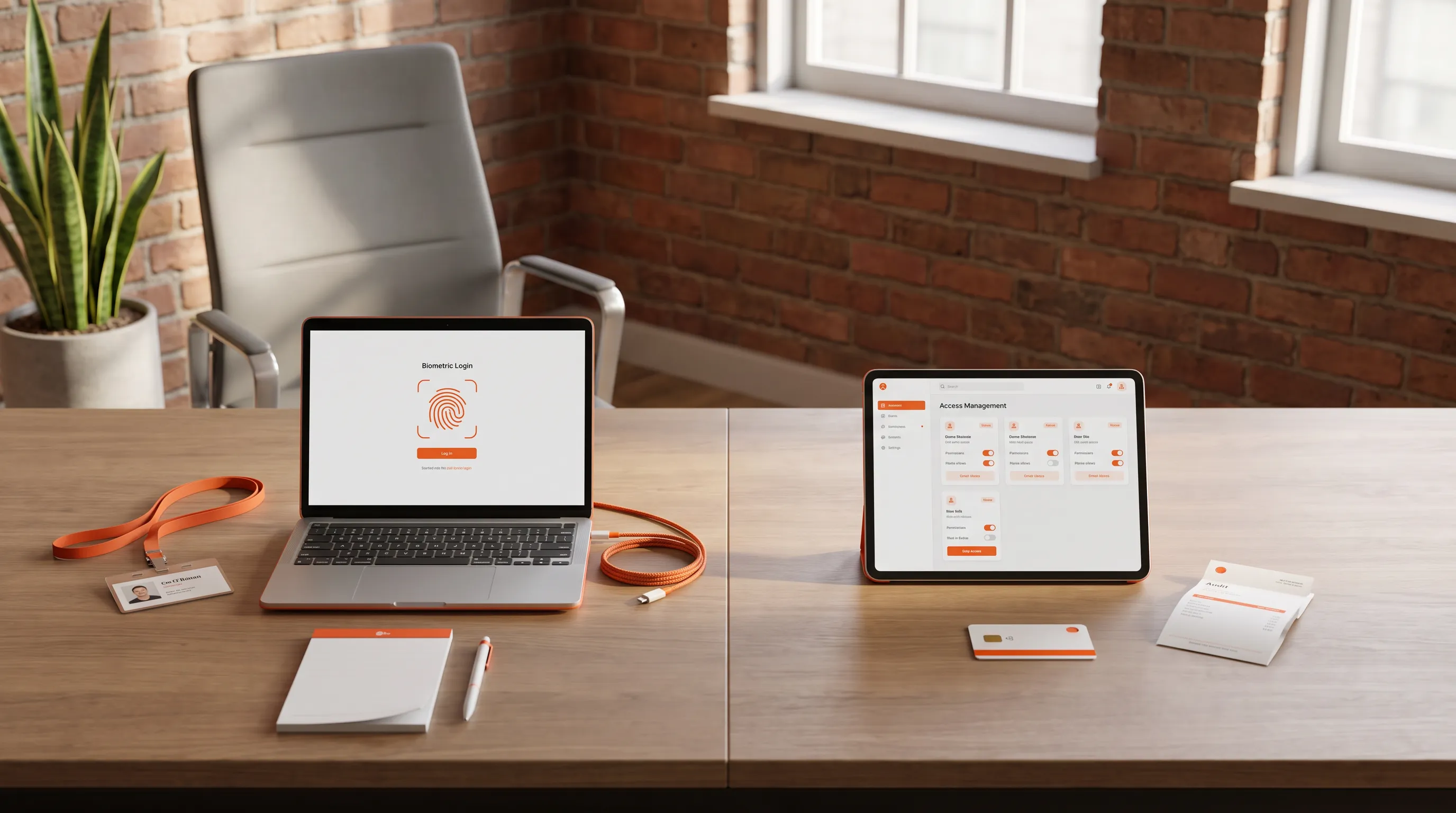
A modern tech startup office with a premium desk split into two zones, featuring a biometric login laptop and an access management dashboard.

Authentication vs Authorisation: What Business Software Teams Need to Get Right

Authentication and authorisation solve different problems: verifying who a user is and deciding what they can access. Understanding the difference helps you assess the cost and risk of getting either one wrong.

A modern tech startup office with diverse professionals discussing around a premium desk, featuring Agile, Scrum, Kanban, and Hybrid delivery models.

Agile vs Scrum: Choosing the Right Delivery Model for Complex Software

Choosing between Agile and Scrum starts with matching the delivery model to your team’s needs. Compare Scrum, Kanban, and deliberate hybrids across cadence and governance, then use the readiness test and decision tree to determine which approach fits your project before commissioning the build.

A sunlit office workspace features a wooden table with a process map, business actors collaborating, and workflow objects in a warm atmosphere.

Web application development services for complex B2B workflows

Some workflow problems are just friction; others are structural limits on how far your business can scale. We cover how to tell which one you're dealing with, what to expect from web application development services, and how to scope a first release that earns back its cost.

Modern tech startup workspace featuring a premium desk with an open laptop displaying a digital agreement, surrounded by business elements.

Software SLA: what business-critical applications need from support

Custom application support isn't one-size-fits-all. We break down the terms that actually matter in a support agreement and the questions to put to your supplier to make sure critical software stays covered.

A modern tech startup office with a collaborative team around a digital tablet, showcasing wireframes and a sleek workspace.

Product discovery: how to de-risk a software project before development

Before spending on development, the assumptions behind a software idea need testing. Learn how to frame the problem correctly and turn research findings into a scope developers can actually estimate against.

A modern tech startup office workspace with a vibrant orange desk, featuring a laptop and tablet, and professionals collaborating in the background.

Custom software development UK: when a bespoke build makes sense

Hitting the limits of your current tools doesn't automatically mean it's time to build something custom. Learn the signals that justify custom software development, the situations where fixing what you have is the smarter call, and rough UK cost context so you can sanity-check your thinking before you talk to a supplier.

A warm, daylight-filled workspace features a wooden desk with a glass roadmap, sticky notes, and a diverse team collaborating.

Technical roadmap: turning software priorities into a practical delivery plan

A phased plan turns discovery findings into a scope, sequence, and funding path you can actually approve. See what belongs in each phase and how to invest in stages without pretending the plan is a fixed schedule.

A realistic workspace scene with a wooden conference table, professionals discussing a 'Software Audit Report' in warm daylight.

Software audit: when to review a codebase before rebuild, support, or scale

A software audit is worth the hassle when it answers a specific question: is this application safe to keep building on, or is it accumulating risk you can't see? Learn what an audit actually examines, the conditions that make one worth the spend, and how to translate technical findings into a decision the business can act on.

A modern tech startup office featuring a premium desk with a sleek monitor, three professionals engaged in various tasks, and natural light.

Application support for business-critical software: what should be covered

Learn what a complete application support service should cover once custom software goes live and becomes part of daily operations. Essential service areas, from monitoring and incident response to maintenance and reporting, show how agreed ownership turns ad hoc technical help into an accountable service.

A UK project leader reviews a tablet at a modern tech startup office, surrounded by abstract panels representing decision criteria.

Software development company in UK: how to choose a partner for complex projects

Learn how to predict whether a complex, business-critical build succeeds, from discovery and architecture through governance. Discover why a growing number of UK buyers pair UK accountability with a European delivery team, and how to run your own shortlist against a concrete set of questions.

A warm, naturally lit workspace with a wooden table where a UK business team discusses labeled folders and notebooks on software models.

Software development services in UK: what scaling businesses actually need

Looking to scale your UK business? Learn which software development services can help you with that and different engagement models on the market. See practical factors that will help you weigh your own situation and describe what you want in plain terms.

A client reviews two contrasting agency proposal binders at a wooden meeting table in a warm, naturally lit workspace.

How to evaluate a custom software development agency beyond the pitch

Most custom software agencies talk a big game during the pitch. The ones worth hiring back it up with evidence. Here's what that proof looks like, and the warning signs that show up together when it's missing.

Title:
Bespoke software development UK: a practical buyer guide

Meta description:
Compare bespoke software development UK costs and fit so you can decide when to build or keep SaaS.

Article:
# Bespo

Bespoke software development UK: a practical buyer guide

This article is a plain-language guide to bespoke software development UK for anyone weighing whether to commission custom software or keep patching together spreadsheets and subscription workarounds. It explains when a build genuinely pays off and what it costs in the UK, with guidance on picking a partner without falling for the lowest quote.

Title:
Bespoke software development services: what UK B2B buyers should expect

Meta description:
Use bespoke software development services to plan scope and costs before you choose a UK partner and l

Bespoke software development services: what UK B2B buyers should expect

This article is a buyer's guide to bespoke software development services for UK and European mid-market leaders who have outgrown off-the-shelf tools. It walks through the full lifecycle bespoke software development services cover and shows how scoping with a lasting engineering relationship reduces risk.