Quality and acceptance
Non-functional requirements decide whether anyone enjoys using the thing. ISO/IEC 25010:2023 organises product quality into nine characteristics, from performance efficiency through to security, and running down that list is a quick way to find the categories you forgot.
For accessibility, name the standard and the level. WCAG 2.2 became a W3C Recommendation on 5 October 2023, and "the portal shall conform to WCAG 2.2 Level AA" is testable in a way that "the portal shall be accessible" never is. Security deserves the same treatment. The NCSC's collection sets out five secure design principles, which begin with the need to establish the context before designing anything, and referencing them tells the delivery team which conversations to expect.
Acceptance criteria turn all of it into something a tester can execute. Northfield's performance entry reads: "Search results for consignment lookup shall return within 2 seconds for 95% of queries at a load of 60 concurrent users. Target to be validated against transport management system response times during technical spike." That last sentence is the important one. It's a number with an honest caveat attached, which beats a number that quietly becomes a contractual obligation nobody can meet. Gojko Adzic's work on Specification by Example makes the case that concrete examples create shared understanding between business and delivery better than abstract statements do, and acceptance criteria are where that shows.
Keep the SRS flexible
A software requirements specification example that can't change is a specification people work around. Build the mechanics of change into the software requirements template itself. Every open question gets an owner's name and a date by which an answer is needed. Every requirement carries a validation date, so anyone reading it in month six knows whether it was last confirmed in week two or last week.
The GOV.UK Service Manual describes the alpha phase as the point at which teams test their riskiest assumptions, and that's the right instinct for an SRS document too. When a requirement depends on something unknown, the correct response is a prototype or a technical spike. A discovery phase typically runs 4 to 8 weeks, which is shorter than the delay caused by building the wrong integration.
Keep a change history at the front of the software requirements template that logs the date of each change and who approved it. It takes two minutes per entry and settles arguments that would otherwise take an afternoon.
Review before sharing
A review is not a proofread. Send the draft to the business owner who holds the budget and to two or three people who actually do the work today. Send it as well to a delivery specialist who can estimate it and to whoever owns security and data protection in your organisation. Each of them reads for something different, and each of them will find something the others missed.
Give them a filter rather than a blank page. For every requirement in the software requirements specification example, ask whether it's necessary and understandable without a glossary. Then check that it is consistent with the requirements around it. Confirm it is feasible within the constraints you've stated and testable by someone who wasn't in the room. Those five checks map closely to the quality criteria in the ISO standard, and they catch most of what matters. PMI's 2018 research found inaccurate requirements gathering was a primary cause in 35% of failed projects, which is a strong argument for spending an extra week on review.
One practical rule: if a reviewer asks what a requirement means, rewrite it.
Download the checklist
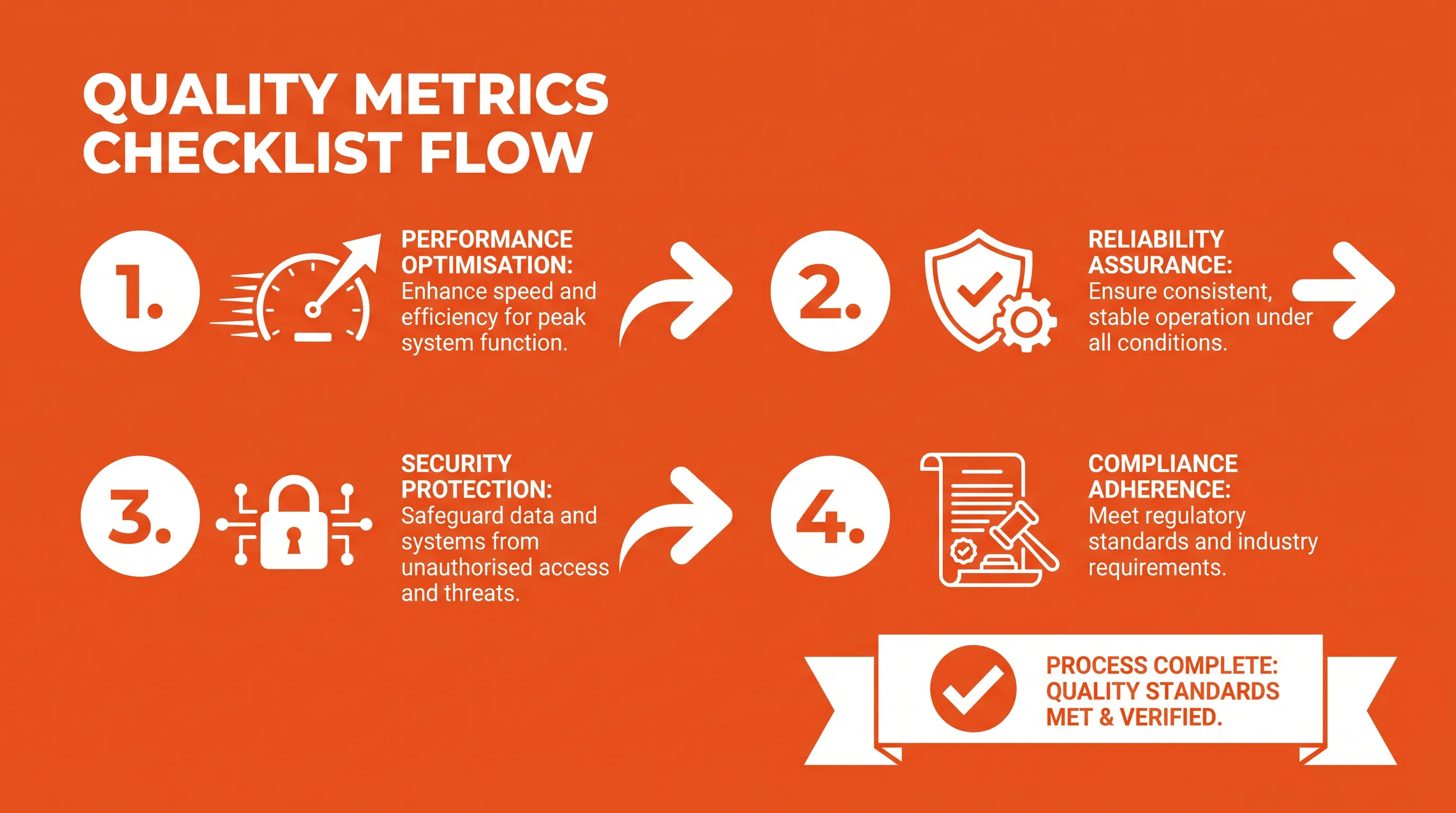
Work through your draft against the sections below. Anything you can't complete is a discovery question.
-
Context: business problem and measurable outcomes. Name the stakeholders and the scope boundaries. Record dependencies and explicit exclusions with reasons.
-
Users and workflows: user groups and their goals. Cover journey steps with handoffs and a permissions matrix for each role.
-
Functions and information: prioritised functional requirements with identifiers and sources. Cover integrations and the records created from data inputs. Include retention justification and reporting outputs tied to decisions.
-
Quality: performance and reliability. Cover security and the accessibility standard and level. Include compliance obligations and acceptance criteria with validation status.
-
Governance: assumptions and open questions with owners and dates. Keep a change history and the date each requirement was last confirmed.
Turn that into a reusable software requirements template for your organisation, and the second specification you write will take half the time of the first.
Validate the requirements
A finished software requirements specification example is the start of an informed conversation. The strongest versions are the ones a delivery team has already pushed back on, because pushback is where the untested assumptions surface.
Evolved Ideas has spent 19 years building bespoke software for organisations including the NHS and Bridgestone, and we start every engagement by understanding the problem before proposing anything. If you've drafted a software requirements specification example and want it challenged before development begins, get in touch with our team.